The FCA doesn’t just want you to identify client vulnerability in financial advice. It wants to see that it made a difference. A suitability report that ticks a vulnerability box but then gives the same advice, the same way, as for anyone else hasn’t really evidenced anything. A good record shows 4 things. First, what you noticed. Second, how it affects this particular decision. Third, what you changed in the advice or the way you delivered it. Fourth, how you checked the client understood. Keep the sensitive detail in your internal file, and use plain, respectful language in the report itself.
This guide covers how to do that in practice, with examples you can adapt and a structure that fits into the reports you already write.
Why vulnerability needs more than a tick box
The short answer: Vulnerability is common, it often isn’t disclosed and it affects outcomes. The FCA’s Financial Lives 2024 survey found that 49% of UK adults, around 26.4 million people, showed characteristics of vulnerability. A file that simply records “vulnerable: no” or “vulnerable: yes” without showing the effect on the advice won’t satisfy the Consumer Duty or the FCA’s vulnerability guidance.
The FCA’s definition comes from its guidance on the fair treatment of vulnerable customers (FG21/1). A vulnerable customer is someone who, because of their personal circumstances, is especially susceptible to harm, particularly when a firm isn’t acting with appropriate levels of care. The important word is susceptible. Vulnerability isn’t a label you attach to a person. It’s a risk you manage while you advise them.
The FCA reviewed how firms were treating vulnerable customers in March 2025. It found that 44% of customers in vulnerable circumstances reported a negative experience with a financial services firm, compared with 33% of other customers. It also found that most consumers with characteristics of vulnerability hadn’t told their providers about their circumstances. It decided not to rewrite FG21/1, which means the existing guidance stands alongside the Consumer Duty and it’s the standard you’ll be measured against.
Retirement advice is a particular pressure point. In its thematic review of retirement income advice, the FCA listed potential vulnerability not being identified or explored as 1 of the issues in the files it reviewed. Having written thousands of suitability reports ourselves, we know how often vulnerability gets noted on the fact find and then never makes it into the reasoning in the report.
The 4 drivers, and what they mean for a suitability report
FG21/1 groups vulnerability into 4 drivers: health, life events, resilience and capability. They’re useful because each one tends to affect the advice in a different way.
| Driver | Typical example in an advice case | How it can affect the advice | What the report should show |
| Health | A recent diagnosis or a condition affecting concentration | Life expectancy, ability to manage complex products, timing of decisions | Whether health changed the recommendation, such as considering an enhanced annuity |
| Life events | Bereavement, divorce, redundancy, retirement | Rushed decisions, unfamiliar responsibilities, emotional pressure | Extra time given, irreversible steps delayed where appropriate |
| Resilience | Little emergency cash, irregular income, debts | Lower capacity for loss, need for accessible funds | Capacity for loss reasoning and emergency fund recommendations |
| Capability | Low financial confidence, limited English, low digital skills | Risk of not understanding the recommendation | How the explanation, format or meeting was adapted |
Clients often show more than 1 driver at the same time. The FCA has noted that outcomes tend to be worse when several drivers are present. A recently widowed client who never managed the household finances is dealing with a life event and a capability gap together. The report needs to recognise both.
What a useful vulnerability record contains
The short answer: A useful record shows the chain from observation to outcome. That means what was identified and how, which part of the advice it affects, what you adjusted as a result, and how you confirmed the client understood. If you can’t trace a line from the vulnerability to a decision you made, the record is just a note, and that’s not enough evidence.
You can use the same 5 headings in every file:
- What Was Identified
- How It Came To Light
- Which Decisions It Affects
- What We Adjusted
- How Understanding Was Checked
How it came to light matters more than people think. A vulnerability the client told you about and one the adviser picked up on are handled differently. If you noticed it yourself, you need to think carefully about how and whether you raise it with the client.
“Which decisions it affects” is the step that’s usually missing. A health condition might be irrelevant to an ISA top-up but central to a drawdown recommendation. Say so explicitly. “Considered, not relevant to this recommendation because…” is a perfectly good record. A blank field isn’t.
Making vulnerability shape the advice itself
Most firms adjust the process for vulnerable clients: longer meetings, written summaries, a family member in the room. That’s good practice, but vulnerability can also change what you recommend, and the report should show this when it does.
Take a client aged 64 who tells you they’ve recently been diagnosed with a condition that is likely to shorten their life expectancy. That isn’t only about how you communicate. It may mean an enhanced annuity offers a much better income than standard rates, and that a drawdown plan modelled to age 95 is built on the wrong assumption. If the report recommends drawdown anyway, it needs to explain why, in light of what the client told you.
Or take a client in their 50s who has just been made redundant with a lump sum and no new job lined up. Their capacity for loss has changed even if their attitude to risk hasn’t. The report should show the emergency fund and the accessible money you’ve set aside before anything is invested, and explain why.
In both cases the vulnerability is part of the suitability reasoning, not a separate paragraph off to the side.
Adjusting how you deliver the advice
The short answer: Process adjustments should be specific to the client and recorded in the file. Examples include allowing extra time before an irreversible decision, offering a second meeting, providing a plain-language summary, involving a trusted person with the client’s consent and choosing a format that suits them. Recording “additional support provided” without saying what that support was won’t hold up.
Think about a client aged 71 whose spouse died 4 months ago. Their spouse used to handle the pensions, and the client now has to decide what to do with an inherited drawdown pot. Sensible adjustments might include:
- Splitting The Advice Over 2 Meetings
- Sending A 1 Page Summary Before The Full Report
- Inviting A Family Member With Consent
- Pausing Any Irreversible Step Until Ready
- Using Plain Language With No Jargon
Each of these belongs in the file, along with the reason for it. In the report, you might write something like: “Because you told us your late husband looked after your pensions, we agreed to go through the options over 2 meetings and send you a short summary first, so you had time to think and ask questions.” That’s specific, factual and respectful. It shows the vulnerability shaped how you advised, without making the client feel labelled.
What goes in the report and what stays in the file
This is a distinction many firms don’t get right. Your suitability report is a client-facing document. Your client will read it, and possibly their family too. Words like “vulnerable”, “vulnerability driver” or a clinical description of their condition can feel intrusive, even when they’re accurate.
A practical split:
| Belongs in the internal file | Belongs in the suitability report |
| The vulnerability identified and which driver it falls under | The circumstances the client told you about, in their own terms |
| How it came to light | Why those circumstances matter for this recommendation |
| Sensitive health or personal details | The effect on the advice, in plain language |
| Your assessment of its severity and whether it’s temporary | The adjustments you made and why |
| Consent for recording and sharing | What happens next and when you’ll review it |
Health information is special category data under UK GDPR, so you need a lawful basis and an additional condition before you record it. The Data Protection Act 2018, Schedule 1 includes a specific condition covering the safeguarding of the economic wellbeing of individuals at economic risk. Explicit consent is the other common route. Check with your data protection lead which basis your firm relies on, and record it consistently. Firms sometimes worry about this so much that they record nothing, and that creates a different problem.
Keeping it current at every review
Vulnerability changes. A bereavement that dominated the first meeting might be much less relevant 2 years later. A client who was fine at onboarding might be diagnosed with a condition between reviews. Your ongoing review letters should revisit vulnerability explicitly, rather than carrying forward whatever was recorded first time.
A simple rule helps: every review should either confirm the previous vulnerability record is still accurate or update it. Just as with the first report, it should also say whether any change affects the ongoing suitability of the plan.
Building this into your templates
The most reliable way to make vulnerability shape the advice is to build it into the template rather than relying on each paraplanner to remember. A dedicated section in your suitability report template, with prompts for the 5 headings above, means the reasoning is there in every report and not just when someone has time.
Good suitability report software can make that section a fixed part of every report, with approved wording that the paraplanner adapts for each client. Planbot includes a client vulnerability checker among its ready-made templates, and firms can build their own version that reflects their vulnerability policy. Paraplanners still decide what’s relevant and how it affects the advice. The template just makes sure the question is always asked.
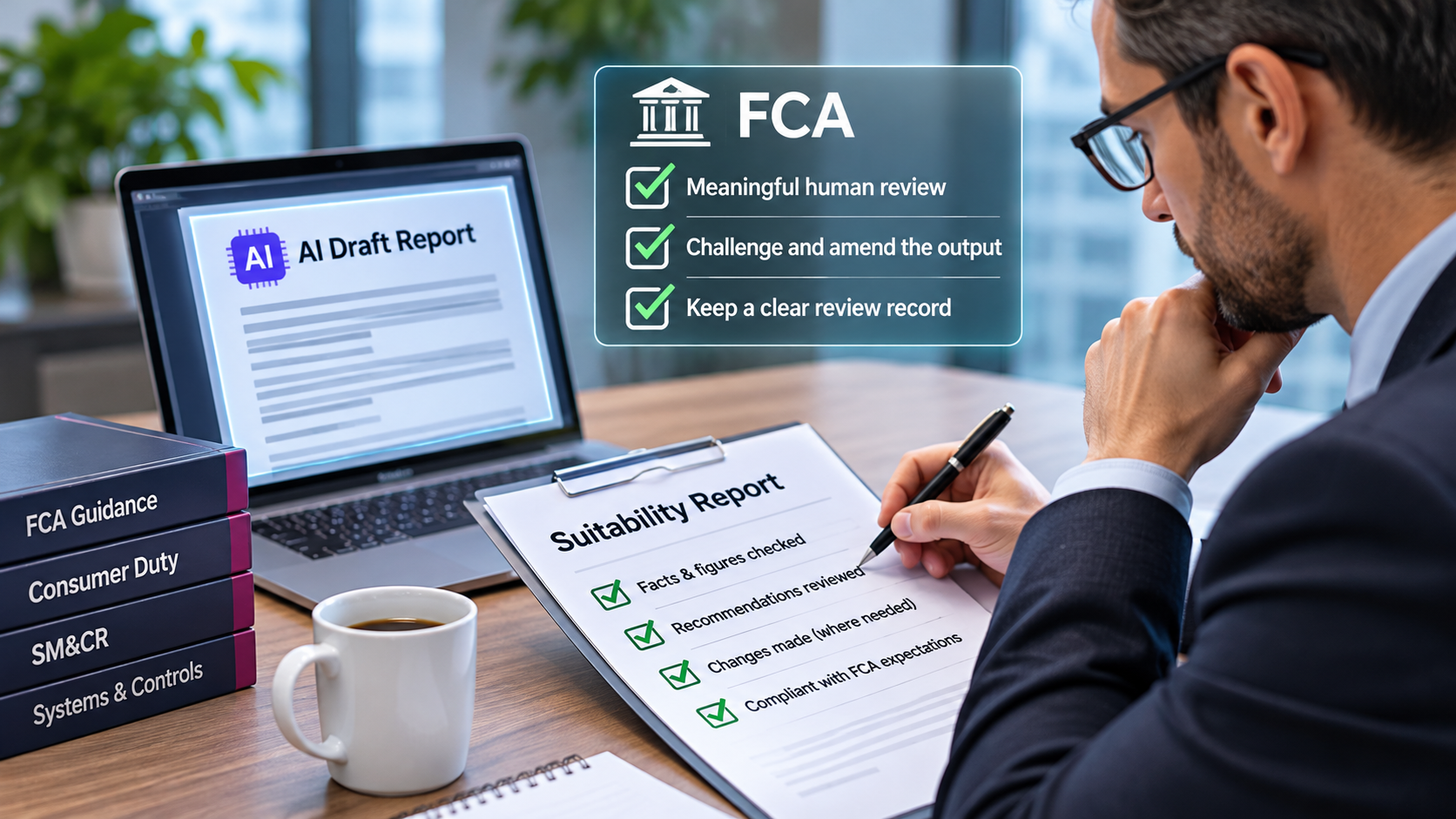
There are limits worth being honest about. An AI suitability report generator can pull vulnerability details from a meeting transcript or fact find into the right section. What it can’t do is judge whether a client’s hesitation in a meeting was a sign of something more, or decide how sensitively to word a difficult point. That’s why AI for paraplanners works best when it handles the structure and drafting and leaves the judgement with your people. The FCA has made the same point about AI generally. Firms shouldn’t exclude vulnerable clients from AI-supported journeys by default, but human review has to be genuine. Our guide to FCA expectations on AI in financial advice explains where the regulator draws those lines.
If you’re looking at tools more broadly, our overview of AI software for financial advisers and our guide to specialist paraplanning software cover what to look for. If you need to justify the investment internally, our article on the business case for AI in your advice firm shows how to measure the time involved.
Frequently asked questions
What are the 4 drivers of vulnerability according to the FCA?
The FCA’s FG21/1 guidance identifies 4 drivers: health, life events, resilience and capability. Health covers physical and mental conditions that affect someone’s ability to carry out daily tasks. Life events include bereavement, divorce and job loss. Resilience is about the ability to withstand financial shocks. Capability covers financial knowledge, confidence and digital or language skills.
Do you need consent to record a client’s vulnerability?
Not always, but you do need a lawful basis. Health information is special category data under UK GDPR, so you need an additional condition under the Data Protection Act 2018. Options include explicit consent or the condition for safeguarding the economic wellbeing of individuals at economic risk. Your firm should choose an approach, document it and apply it consistently.
Should you tell a client you’ve recorded them as vulnerable?
You should be open about what you record and why, but you don’t have to use the word “vulnerable”. Describe the circumstances the client shared and explain how they’ve shaped the advice. Most clients respond well to “because you told us…” and less well to being labelled.
How often should vulnerability be reviewed?
At every client review, and whenever you become aware of a change in circumstances. Vulnerability can be temporary, permanent or can come and go. Each review should confirm or update the record and say whether any change affects the ongoing suitability of the client’s plan.
What does good practice look like when recording vulnerability?
Good practice records what was identified and how, which decisions it affects, what adjustments were made and how the client’s understanding was checked. It keeps sensitive details in the internal file and uses plain, respectful language in the client-facing report.
See how Planbot builds vulnerability into every report
If vulnerability currently sits on your fact find but rarely shapes the reasoning in your reports, a template-led approach can close that gap. Planbot turns your firm’s own suitability report and vulnerability checker templates into AI-powered documents. Every report then prompts the same questions, and your paraplanners review and edit each one before it goes to the client. No client data is stored or used to train AI models.
Book a demo and see how your own templates could work in Planbot.